Welcome March – Seagrass Awareness Month!
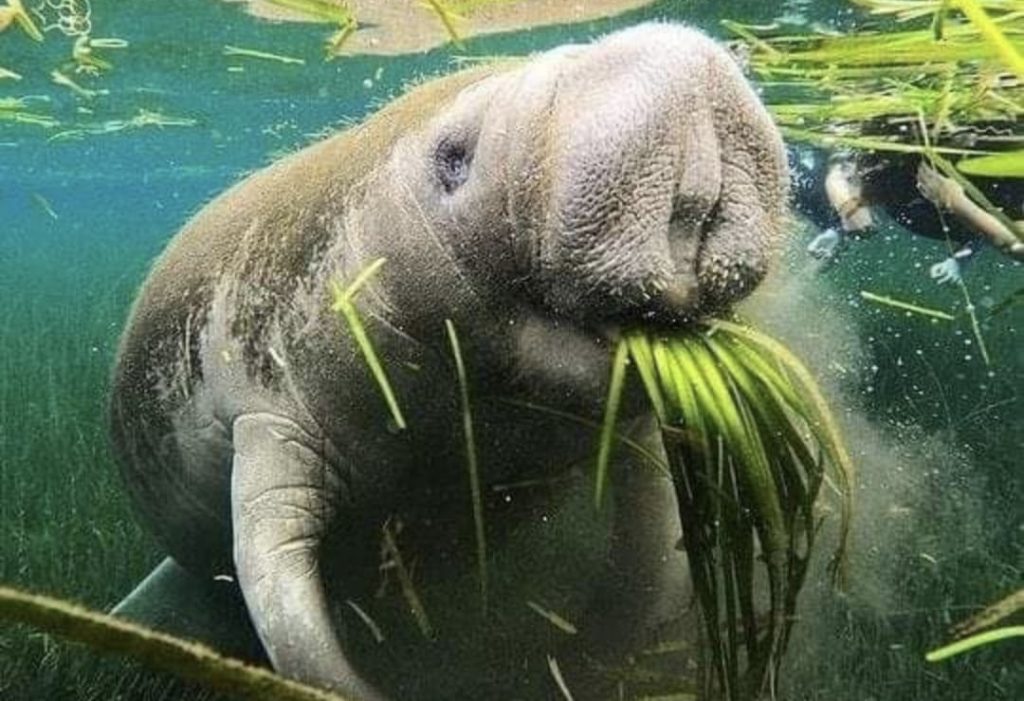
Greetings to you! Did you know seagrass is so important that we celebrate it during the month of March? It’s true! March is Seagrass Awareness Month! So, why is seagrass important?
About 100 million years ago, seagrasses began evolving and today there are approximately 72 different species of this plant found around the world. Additionally, seagrasses can create very large, dense underwater meadows, which are amazingly large enough to be seen from space! Seagrasses also provide a wonderful habitat to a diverse community of sea life, ranging from small invertebrates to large fish, crabs, turtles and marine mammals … manatees:).
According to the National Wildlife Federation[NWF], “Seagrasses are underwater plants that evolved from land plants. They are like terrestrial plants in that they have leaves, flowers, seeds, roots, and connective tissues, and they make their food through photosynthesis. Unlike terrestrial plants, however, they do not have strong stems to hold themselves up—instead they’re supported by the buoyancy of the water that surrounds them. Seagrasses are a very important food source and habitat for wildlife, supporting a diverse community of organisms including manatees, fish, octopuses, sea turtles, shrimp, blue crabs, oysters, sponges, sea urchins, anemones, clams, and squid. Seagrasses have been called ‘the lungs of the sea’ because they release oxygen into the water through the process of photosynthesis.”
Seagrasses are found in many locations on our planet, from the waters in Florida, to other global tropical regions, and as far north as the Arctic Circle. Because most of the species exhibit flowing long green grass-like leaves, it’s easy to see why seagrasses have the name they do. Seagrasses actually love shallow salty and brackish waters and easily can be mistaken for seaweeds. However, seagrasses are much more closely related to flowering plants on land. Why? Because they actually have roots, leaves, and stems, which produce flowers and seeds.
Seagrass beds are actually very productive and are more important than what meets the eye. Here are a few quick fun facts about seagrass …
- Approximately 85% of commercial and recreationally fished species in Florida spend some time in a seagrass bed.
- Of the 60 or so seagrass species, turtlegrass (Thalassia testudinum) is the dominant one in Florida.
- Seagrass meadows help fight climate change because they absorb 10-15% of the carbon absorbed by the ocean, which overall absorbs about 25% of global carbon emissions.
- Like salt marshes, seagrass beds slow incoming waves and accrue sediment. The wave absorption protects shorelines from being battered and the sediment filtered from the water helps clean it.
- In a recent study by Randall it reported, “58% of seagrass habitats are in decline.” If you look at all of the services provided by these habitats, you can see that this is cause for concern.
Seagrass Habitat is Declining Globally
According to the International Union for Conservation of Nature[IUCN] “Seagrasses are one of the most rapidly declining ecosystems on Earth. These underwater marine coastal plants are losing 7% of their known area per year. This alarming loss was confirmed at the11thInternational Seagrass Biology Workshop(ISBW1) in Sanya, China where 100 leading seagrass scientists and conservationists met to discuss and update the global status of this critical habitat.
The results of seagrass research and monitoring by international scientists confirmed the global trend of continued seagrass habitat loss and degradation, driven by unsustainable practices in coastal regions including rapid development and pollution.
Seagrass losses pose a further danger to already-threatened species that depend on seagrass for food and habitat, including manatees, dugongs, sea turtles, and sea horses. Seagrass habitats are a nursery for many fisheries species and stabilize and filter shallow coastal environments. The food security of coastal people worldwide depends on healthy seagrass meadows. Additionally, ocean carbon is stored in seagrass meadows, preventing its release into the atmosphere where it would contribute to global climate change.”
To learn more about seagrass the endangered Florida manatee, below is an awesome award-winning Kobee Manatee® book for children…
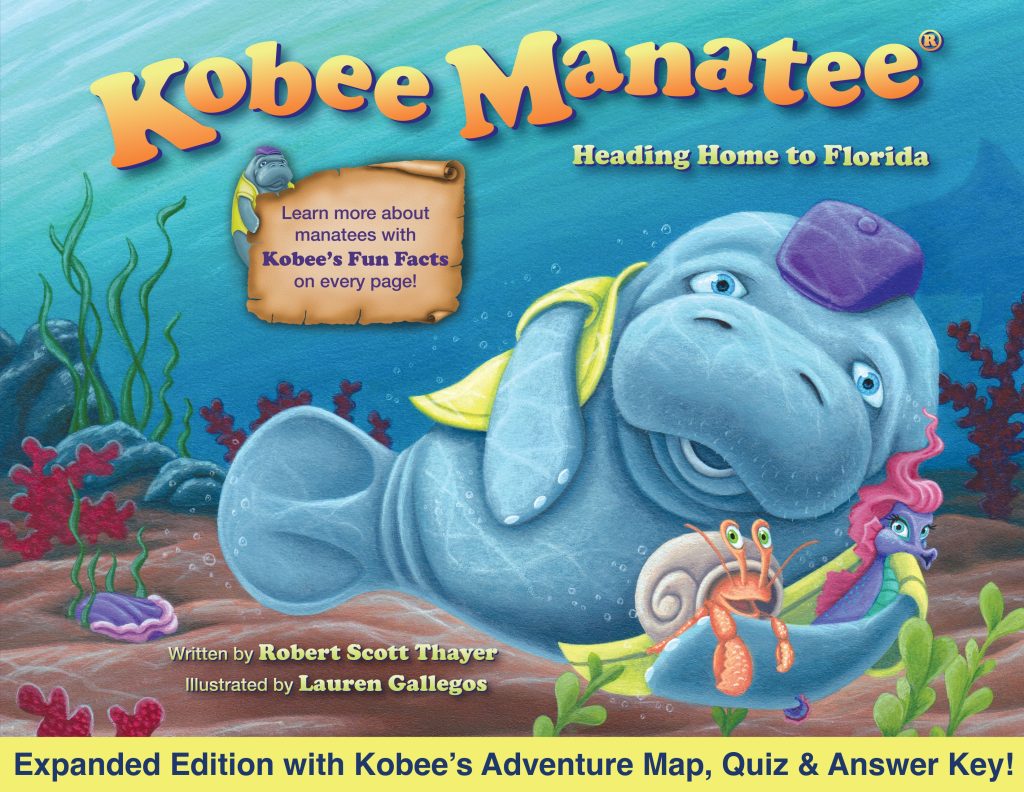
Synopsis: In late September, Kobee Manatee® is on a twelve-hundred-mile mission to get back home to Florida from Cape Cod, Massachusetts before the impending cold threatens his life. On his southbound journey, he meets two new friends: Tess the seahorse, who loves to learn, and Pablo the hermit crab, who is in search for a new shell. Will Kobee and his friends make it to Florida in time? Children learn all about manatees and their habitat!
We Have Excellent Reviews for Kobee Manatee!
“Children can learn a great deal about manatees and their habitat by reading about Kobee and his friends and their traveling adventure.” – Dr. Katie Tripp, Director of Science and Conservation, Save the Manatee Club
“This luxuriously illustrated, infectiously charming story makes us want to save the manatee and have a plush version to hug.” – Foreword Clarion Reviews
“A swimmingly fun, educational trip sure to be enjoyed by young friends of the manatee.” – Kirkus Reviews
“Kobee Manatee: Heading Home to Florida is a recipient of the prestigious Mom’s Choice Award. The Mom’s Choice Awards® (MCA) evaluates products and services created for parents and educators and is globally recognized for establishing the benchmark of excellence in family-friendly media, products and services. Using a rigorous evaluation process, entries are scored on a number of elements including production quality, design, educational value, entertainment value, originality, appeal and cost. Around the world, parents, educators, retailers and members of the media trust the MCA Honoring Excellence seal when selecting quality products and services for families and children.” – Mom’s Choice Awards
If you are in Florida and you see a sick or injured manatee, please call the Florida Fish and Wildlife Conservation Commission at: 1-888-404-FWCC. They are the folks who are responsible for rescuing us in Florida.
Here’s the Save the Manatee Club link to learn more about manatees …
https://www.savethemanatee.org
~ Robert Scott Thayer
Related Posts
Celebrate the Green with March because It’s Seagrass Awareness Month
March is Seagrass Awareness Month
March to the Green with Seagrass Awareness Month!New Research Uncovers How Seagrass can Combat Disease!


