The Extraordinary Amazonian Manatee
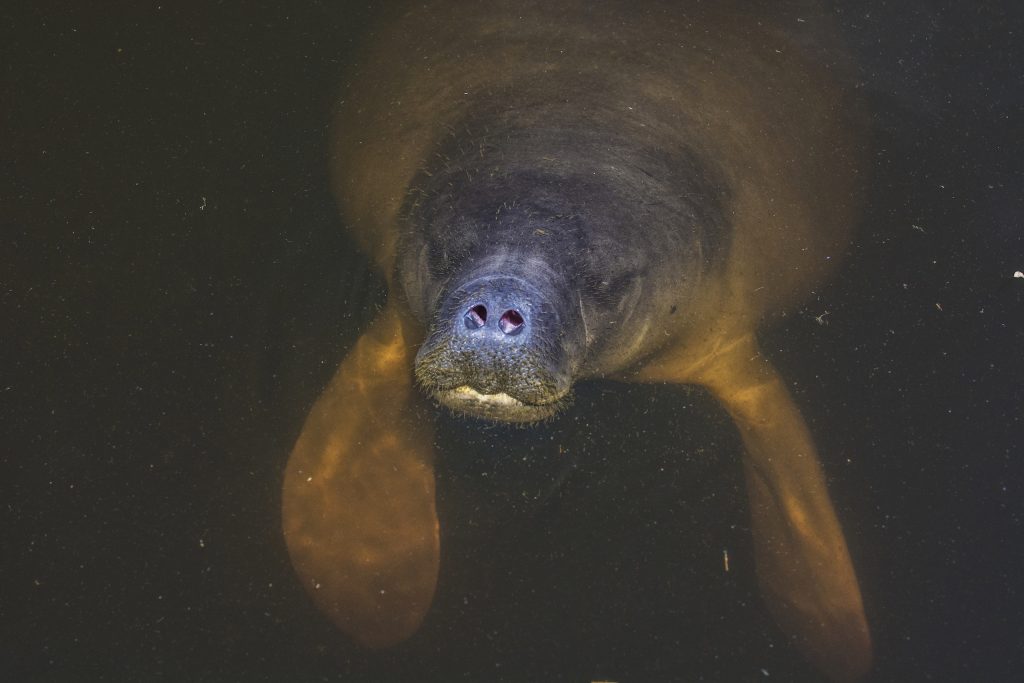
Greetings to you! The awesome Amazonian manatee lives exclusively in the freshwater of the Amazon River located in South America. These manatees can be found in Brazil, Colombia, Peru, Ecuador, and Guyana, especially where there is slow-moving, shallow waters and lagoons. And like all manatees, the Amazonian manatee maintains the balance of coastal ecosystems. This balance is accomplished by the manatee grazing on underwater vegetation, which helps control “excessive plant growth in rivers, lagoons, and coastal channels.”
The Amazonian Manatee Unique because:
- No Nails on Flippers: Unlike other manatee species, which have three to four nails on their flippers (relics from their land-dwelling ancestors), the Amazonian manatee lacks these nails entirely.
- Exclusive Freshwater Habitat: They are the only sirenian species that lives solely in freshwater habitats (rivers, lakes, and flooded forests of the Amazon Basin) and never enter saltwater, whereas other species are found in coastal, brackish waters.
- Unique Skin and Appearance: They have smooth, rubbery skin that is often darker (gray to black) than their relatives, and they are usually distinguished by a prominent white or pink patch on their chest/ventral area.
- Specialized Feeding Anatomy: To facilitate surface feeding on floating vegetation, they have the smallest degree of rostral deflection (30.4°) among manatees, meaning their snout is relatively straight compared to bottom-feeding manatees.
- Long-Term Fasting Ability: Due to dramatic, seasonal water level changes in the Amazon, they have adapted to survive on their large fat reserves during the dry season (March–July), often fasting for weeks or even months at a time.
- Unusual Feeding Behavior: They can consume up to 8% to 10% of their body weight in vegetation daily and are known to eat palm fruits that fall into the water.
- Smaller Body Size: They are the smallest of the three species, typically measuring between 6.5 to 9 feet in length and weighing between 770 to 1,100 pounds.
To learn more about manatees, below is an awesome award-winning Kobee Manatee® book for children…
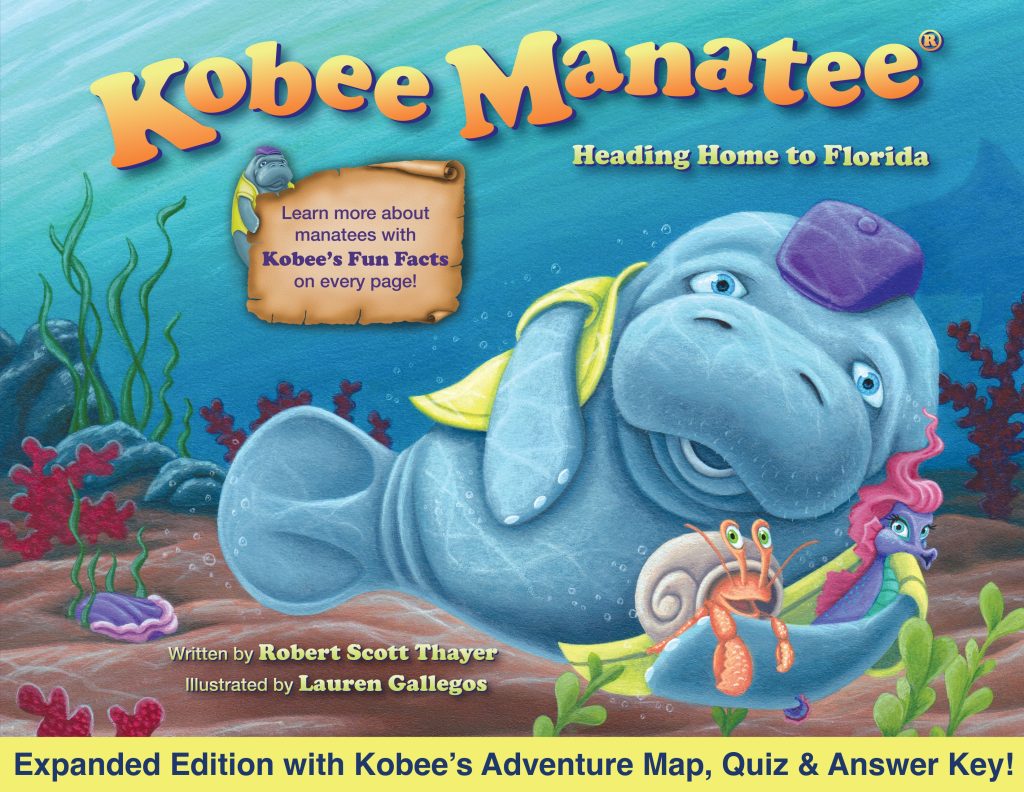
Synopsis: In late September, Kobee Manatee® is on a twelve-hundred-mile mission to get back home to Florida from Cape Cod, Massachusetts before the impending cold threatens his life. On his southbound journey, he meets two new friends: Tess the seahorse, who loves to learn, and Pablo the hermit crab, who is in search for a new shell. Will Kobee and his friends make it to Florida in time? Children learn all about manatees and their habitat!
We Have Excellent Reviews for Kobee Manatee!
“Children can learn a great deal about manatees and their habitat by reading about Kobee and his friends and their traveling adventure.” – Dr. Katie Tripp, Director of Science and Conservation, Save the Manatee Club
“This luxuriously illustrated, infectiously charming story makes us want to save the manatee and have a plush version to hug.” – Foreword Clarion Reviews
“A swimmingly fun, educational trip sure to be enjoyed by young friends of the manatee.” – Kirkus Reviews
“Kobee Manatee: Heading Home to Florida is a recipient of the prestigious Mom’s Choice Award. The Mom’s Choice Awards® (MCA) evaluates products and services created for parents and educators and is globally recognized for establishing the benchmark of excellence in family-friendly media, products and services. Using a rigorous evaluation process, entries are scored on a number of elements including production quality, design, educational value, entertainment value, originality, appeal and cost. Around the world, parents, educators, retailers and members of the media trust the MCA Honoring Excellence seal when selecting quality products and services for families and children.” – Mom’s Choice Awards
If you are in Florida and you see a sick or injured manatee, please call the Florida Fish and Wildlife Conservation Commission at: 1-888-404-FWCC. They are the folks who are responsible for rescuing us in Florida.
Here’s the Save the Manatee Club link to learn more about manatees …
https://www.savethemanatee.org
~ Robert Scott Thayer
Related Posts
Introducing the Iconic Amazonian Manatee


